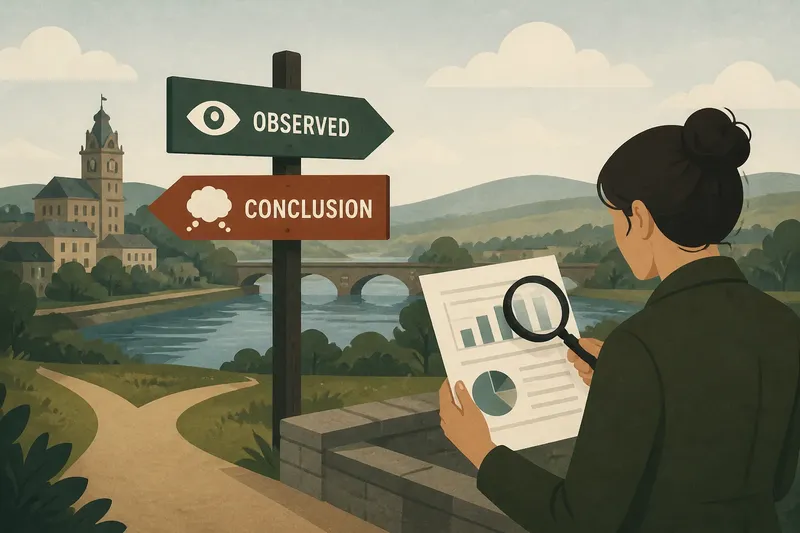
The Missing Background That Changes the Scale
Context in news reporting can show whether an event is isolated or part of a longer sequence, helping you judge its scale without overstating what is known.
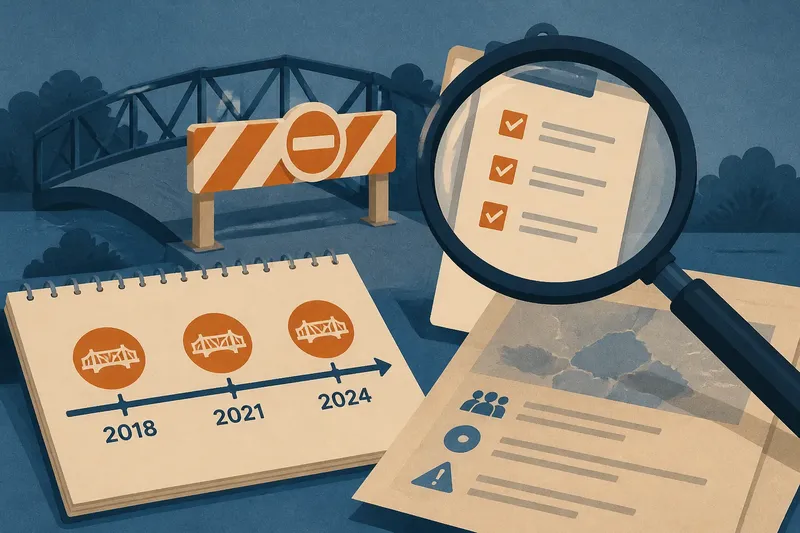
A local report says a council has closed a footbridge after another inspection raised concerns. Read alone, the notice sounds like a fresh failure; add the detail that the bridge has been closed for repairs twice before, and the story begins to look different. Context in news reporting can change whether an event seems isolated, recurring or part of a longer sequence.
The point is not to make every incident part of a grand pattern. It is to ask what background would help a reader judge the event’s scale, and whether the available record supports that background. These five checks can help distinguish useful context from a comparison that merely makes a story feel larger.
1. What is the relevant time window?
A report may describe something as “the latest” event without saying how far back the sequence runs. The word implies recurrence, but the reader still needs to know whether the comparison is with earlier events this week, over several years or across a much longer period. Those time windows answer different questions.
For a recurring disruption, a short window may show whether incidents are becoming more frequent. A longer one may reveal that the event belongs to a familiar seasonal pattern, or that the underlying conditions have changed. Neither view automatically cancels the other.
Look for dates and a clear description of the period being compared. If a report does not supply them, ask what the phrase “in recent years” means in that particular account. A useful follow-up is not necessarily a demand for a precise count; it may simply be a request to identify the start and end points behind the comparison.
2. Is this an isolated incident or a recurring pattern?
One event can be unusual in its details and still resemble earlier events in a broader way. To judge whether a story is isolated or recurring, look for the basis of the comparison: similar locations, causes, institutions or outcomes. A shared label alone is thin evidence of a shared pattern.
Suppose an invented local report describes a school cancelling outdoor activities after smoke reaches the grounds. Say the story also notes that nearby schools changed their arrangements during earlier smoke episodes, but does not say whether the smoke came from the same source. That background would support a recurring disruption in the area, while leaving the cause and any wider trend unresolved.
This distinction matters because repeated effects do not always have repeated causes. A series of transport delays, for instance, might arise from unrelated faults, or from one persistent weakness. Reporting that identifies the incidents but not their connection should not be read as having established a common explanation.
3. Does the comparison use the same measure?
Scale can change when a report moves between measures without making the shift visible. A story may discuss the number of complaints in one section and the number of confirmed cases in another. Both can be relevant, but they do not describe the same thing.
Check what is being counted, who is included and how an event qualifies for the category. A total covering an entire region cannot be compared straightforwardly with one covering a single district. Nor does a rise in reports necessarily mean the underlying event itself has become more common: reporting routes, definitions or public attention may have changed.
Think of a kitchen drawer: a tally of all the loose batteries is not the same as a tally of batteries that still work. The objects look similar until the question being asked is made clear. In reporting, the equivalent question is whether the earlier and current figures measure the same kind of event under comparable rules.
4. What has changed between then and now?
Background is most useful when it explains both continuity and change. A story may describe a recurring problem, while conditions around it have shifted: the affected area may be larger, the responsible body may have changed, or the reporting system may now capture incidents that previously went unrecorded.
Without that distinction, an older event can be made to seem more comparable than it is. A current count might include cases that were classified differently in earlier records. Or an earlier account may refer to a smaller area than the one covered today. Those differences do not make comparison impossible, but they do affect what conclusion the comparison can bear.
Notice whether a report tells you what has stayed consistent and what has changed. If it offers only a dramatic “before and after” contrast, consider which parts of the situation are actually aligned. Sometimes the responsible conclusion is modest: the issue has appeared before, but the available information does not establish whether its scale has grown.
5. Does the background clarify scale or imply a cause?
A sequence can show that events recur without showing why they recur. Readers often encounter a timeline, a cluster of earlier incidents or a list of affected places and infer a single cause. That inference may be plausible, but chronology by itself cannot establish it.
Separate three questions: did similar events occur before, did they share a cause, and has the cause changed over time? A report may answer the first while leaving the others open. The distinction is especially important when an article places a current event beside a past one but gives little detail about how closely the circumstances match.
Pay attention to the verbs used to connect events. “Followed,” “coincided with” and “was linked to” make different claims. If the reporting does not explain the connection, treat the earlier event as context for scale or sequence, not as proof of an explanation.
Which context questions should you ask?
How far back does the comparison go?
Find the period behind words such as “again”, “record” or “the latest”. If the timeframe is missing, the strength of the recurrence claim is hard to judge.
Are the earlier events genuinely comparable?
Check whether they share the relevant features, such as location, definition or type of outcome. A broad resemblance can provide orientation without establishing a single pattern.
What changed in the records or conditions?
Look for shifts in coverage, classification, boundaries or reporting practice. These can alter the apparent scale even when the underlying situation is less clear.
What does the background leave unresolved?
Separate evidence of repetition from evidence of cause, growth or responsibility. A careful report may provide useful context and still leave those questions open.
How can a brief report make room for context?
Short reporting cannot include every earlier event, and a long history can distract from the immediate news. The useful question is whether the selected background changes how a reader understands the event, and whether the report says enough to explain why it belongs there.
A concise account might identify one relevant earlier episode, state the period being considered and describe the basis for comparing it with the present event. It can then mark the limits: perhaps the pattern is visible, while its cause remains uncertain. That is more informative than a string of past incidents without explanation.
When reading, try a small mental edit: remove the historical sentence and ask what impression remains; then restore it and ask exactly what changed. If it changes a one-off event into a recurring sequence, check whether the sequence is documented. If it only adds drama without clarifying time, similarity or scale, it may be background in name rather than useful context.
Context in news reporting is not a verdict attached to an event. It is a way to set the event beside an appropriate stretch of time and a fair comparison, while keeping the limits visible. The most useful background may be brief, but it should leave you better able to tell what is repeated, what is new and what the record cannot yet settle.